

Solutions for cost effective and high-quality machining of aerospace wing
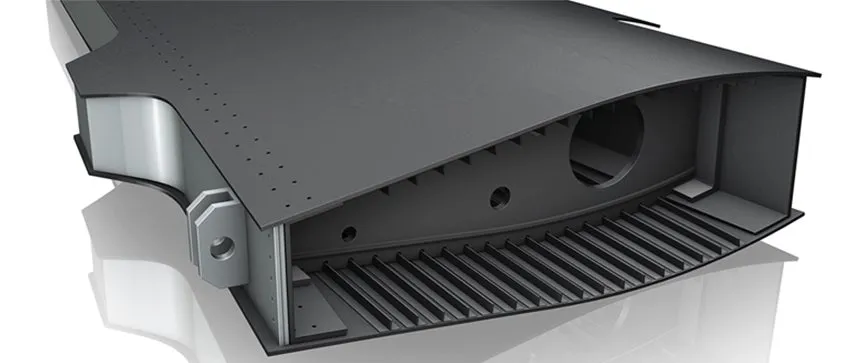
The main challenges for machining these types of structural components are the hole making, edging and surface machining.
Tooling solutions for aerospace wing
Composite solutions – product offer for composite machining
Machining solutions dedicated to specific composite materials as well as operations and demands are becoming an increasingly important competitive factor.
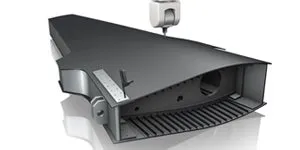
CoroDrill® 863 with -O geometry - solid carbide drills for high quality hole making and longer tool life in composite
Hole making in CFRP (carbon fibre reinforced polymer composite) - facts and demands
- Minimal delamination of fibres
- Good surface finish and dimensions
- Unidirectional or woven layers
- High rate of material removal
Solutions
- CoroDrill® 863 with -O geometry, standard diameter range 3–9.5mm (0.118–0.374 inch)
- Drill depth 3–10 × drill diameter
Benefits
- Enhanced tool life – more metres of composite material drilled
- Minimal delamination
- Excellent hole finish and tolerance
Cutting data
- Visit CoroPlus® ToolGuide for precise cutting data suggestion
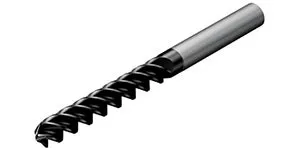
CoroMill® Century - Surface machining of carbon fibre
Facts and demands
- Primary structure carbon fibre
- Minimal splintering of fibres and delamination
- Good surface finish and dimensions
Solutions
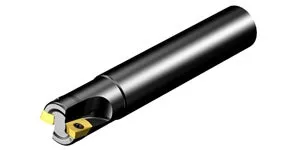
- CoroMill Century with PCD inserts
- Cutter: R590-04C3-11M
- Inserts: R590-1105H-PS2-NL CD10
Cutting data
- Visit CoroPlus® ToolGuide for precise cutting data suggestion
Learn more about CoroMill Century Light cutting face mill for high speed finishing
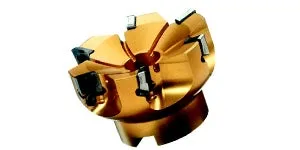
CoroMill® 390 - Sturtz milling: profiling of carbon fibre
Facts and demands
- Tilting of tool 2-10 degrees- High rpm and feed rate
- Primary structure carbon fibre
- Hand held pneumatic machine design
- 2D and 3D feature solutions
- Good surface finish and dimensions
Solutions
- CoroMill 390
- Cutter: R390-032A32-11H
- CD10 PCD inserts (3 mm (0.118 inch) modied radii)
Cutting data
- Visit CoroPlus® ToolGuide for precise cutting data suggestion
Ball end scanning Vs Sturtz
32 mm (1.260 inch) diameter tools used with the same cutting data.
| 32 mm Ball | 32 mm Sturtz | |
| Surface Speed, m/min (ft/min) | 2011 (6597.69) | 2011 (6597.69) |
| RPM | 20000 | 20000 |
| Feed/tooth, mm/min (in/tooth) | 0.12 (0.005) | 0.12 (0.005) |
| Table feed, mm/min (in/min) | 12000 (472.441) | 12000 (472.441) |
| No of flutes | 5 | 5 |
| Step over, mm (in) | 3.52 (0.139) | 11 (0.433) |
| Passe/Sq Metre | 284 | 91 |
| Time for 1 Sq Metre | 23.7 | 7.6 |
| Over 3 times faster generating the surface |
Typical to use smaller ball end tools resulting in even greater productivity when switching to Sturtz techniques.
Drilling
Drilling formulas and definitions To know how to calculate drilling speeds and feeds... chevron_right
Machining formulas and definitions
Machining formulas and definitions Machining formulas and definitions Find the... chevron_right
Threading
Threading formulas and definitions This section covers threading formulas and definitions... chevron_right
Training Handbook
H 84 H 86 H 88 H 90 H 92 Parting and grooving Threading Milling <code>Drilling</code> ... chevron_right
