

Gear manufacturing
Introduction
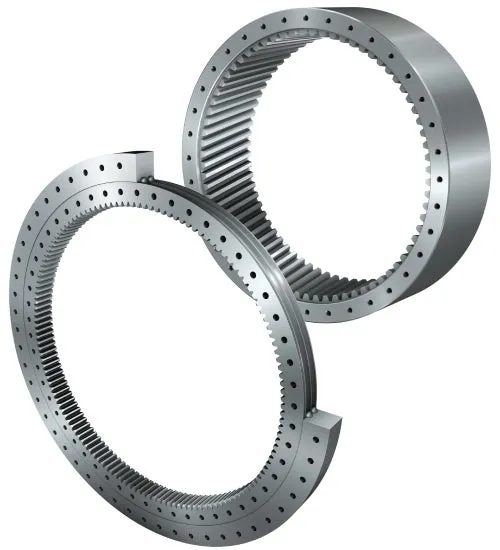
Gear manufacturing is a critical process in the production of transmissions, industrial equipment, automotive drivetrains, wind turbines, robotics, and e-mobility systems. As demands for higher efficiency, tighter tolerances, and shorter lead times continue to increase, manufacturers must select machining methods that provide the optimum balance between productivity, flexibility, quality, and cost. The choice of gear manufacturing method depends on component geometry, quality requirements, production volume, machine tool capability, and overall manufacturing strategy.
Traditionally, gear manufacturing has relied on gear hobbing and form milling. However, advances in machine tools, CNC technology, CAM software, cutting tools, and multitask machining platforms have enabled newer manufacturing technologies such as power skiving and InvoMilling®. These technologies are reshaping the gear manufacturing landscape and providing manufacturers with greater flexibility and productivity.
Evolution of Gear Manufacturing
For many decades, gear hobbing has been the dominant process for manufacturing external cylindrical gears. The process offers high productivity, excellent accuracy, and the ability to generate a wide range of gear geometries through continuous cutting action. For medium and large production volumes, hobbing remains one of the most economical manufacturing methods available.
Alongside hobbing, tooth-by-tooth machining methods such as form milling and disc cutting have provided flexible solutions for prototypes, small batches, large-module gears, and special gear profiles. These methods require lower tooling investment and can often be performed on standard machining centers and multitask machines.
More recently, power skiving has emerged as one of the most significant developments in gear manufacturing. Improvements in machine rigidity, spindle synchronization, software simulation, and cutting tool technology have transformed power skiving into a highly productive solution for both internal and external gear production. The ability to machine complete components in a single setup has made power skiving particularly attractive for modern manufacturing environments focused on reducing lead times and improving productivity.
Gear Manufacturing Methods
Gear Hobbing
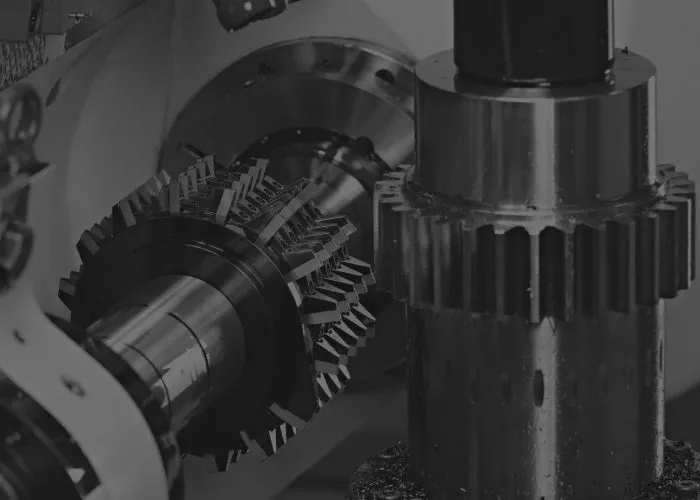
Gear hobbing is a continuous generating process in which a rotating hob progressively forms gear teeth while the gear blank rotates in synchronization. The process is highly productive and capable of producing a broad range of external gear geometries with excellent consistency.
Advantages
- High productivity for medium and large production volumes.
- Excellent gear accuracy and repeatability.
- Suitable for roughing, semi-finishing, and finishing operations.
- Proven and widely established manufacturing technology.
Modern Developments
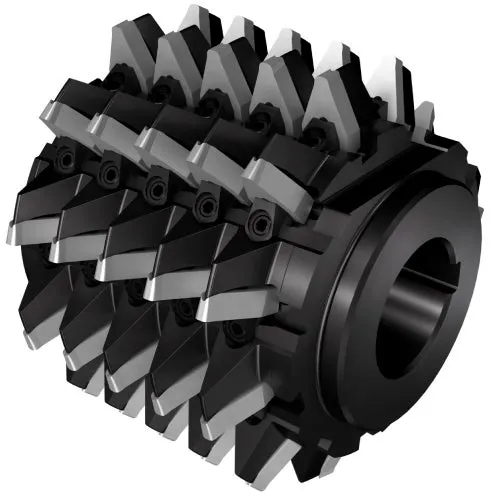
A major advancement in hobbing technology has been the introduction of indexable carbide-insert hobs. Compared with traditional HSS and solid carbide hobs, indexable hobs enable:
- Higher cutting speeds.
- Increased feed rates.
- Greater chip loads.
- Improved metal removal rates.
- Reduced tooling costs.
- Elimination of expensive regrinding and re-coating operations.
- Simplified tool management and inventory control.
Combined with modern machine tool rigidity and advanced carbide grades, these improvements have significantly increased hobbing productivity while reducing the cost per gear. Sandvik Coromant was the pioneer in carbide indexable milling hobbs production launching to the market Coromill 176.
When to use the gear hobbing process with Coromill 176
- Roughing, semi-finishing, finishing
- Module range: 3–10
- Hobbing machines, multi-task machines, 5-axis machines
How to apply gear hobbing with Coromill 176
- All teeth cut different chips. Tool life is limited by the heaviest cuts and thickest chips. In order to evaluate chip thickness, calculate the maximum chip thickness hex to determine axial feed rate. Max hex is calculated according to Hoffmeister’s equation
- Recommended max hex = 0.18–0.22 mm (0.007–0.009 inch)
- Use hob shifting if possible in order to improve tool life
- Dry milling is to prefer with carbide tools and will give a better tool life compared to wet milling
- If possible, use down milling for better tool life
Power Skiving
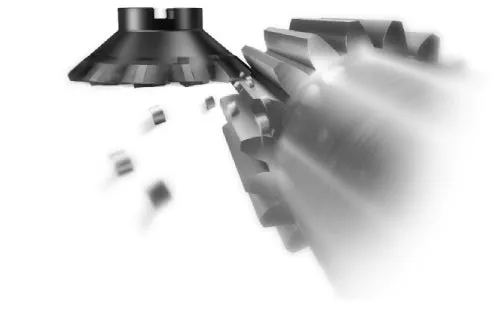
Power skiving is a continuous generating process that combines the flexibility of machining centers with productivity levels comparable to dedicated gear-cutting equipment. The process is particularly effective for internal gears and splines but is equally applicable to external gears.
Advantages
- One-setup machining capability.
- Reduced component handling and logistics.
- Shorter manufacturing lead times.
- Ability to machine close to shoulders and adjacent features.
- Suitable for internal and external gears.
- Excellent productivity for high-volume production.
- Compatibility with dedicated gear machines, multitask machines, and machining centers.
As manufacturers move toward flexible manufacturing systems and e-mobility applications, power skiving is increasingly replacing conventional shaping operations and complementing traditional hobbing processes.
When to use the power skiving process
- Internal and external gears and splines
- Cylindrical spur and helical gears
- Roughing to finishing
InvoMilling®
InvoMilling® is a CAM-based gear manufacturing process designed for external gears, splines, and straight bevel gears. Unlike conventional methods that often require dedicated tooling for each gear profile, InvoMilling® uses standard tools combined with specialized software to generate different gear geometries.
Advantages
- High manufacturing flexibility.
- Reduced need for dedicated gear tooling.
- Shorter lead times.
- Capability to machine complete components in a single setup.
- Well suited for prototypes, one-off parts, and small-batch production.
This approach allows manufacturers to keep a limited inventory of cutting tools while maintaining the ability to produce a large range of gear profiles.
When to use the InvoMilling™ process
- For machining external gears and splines, double helical gears, herringbone gears and straight bevel gears.
- When gear components for need to be produced without the need for dedicated tools or machines,
- When short lead times are crucial,Can use with or without flank corrections
- Module range: 0.8‒100
- For roughing to finishing
- For small to medium batch production
How to apply InvoMilling™
Watch the film and see how to generate a finished CNC program with the InvoMilling™ CAD/CAM software in three easy steps:
- Define your gear geometry by importing the gear data from your component drawing.
- Choose your machining strategy, add roughing and finishing operations and select tools to be used from the tool library.
- Simulate the machining process to verify tool paths before automatically generating a CNC program for your machine.
Disc Cutting and Form Milling
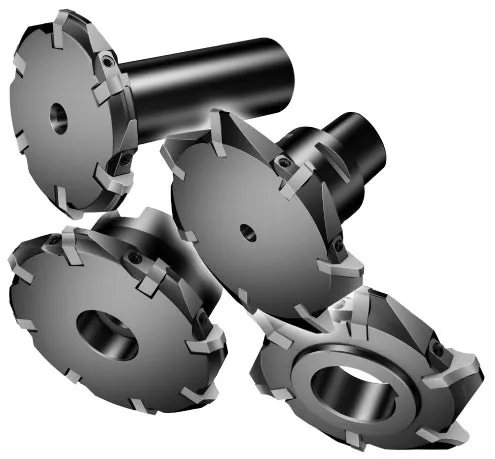
Disc cutting and form milling remain valuable manufacturing methods where flexibility is more important than maximum productivity. These methods machine one tooth space at a time and can often be performed on existing machining centers, turning centers, and multitask machines.
Typical Applications
- Prototype production.
- Low-volume manufacturing.
- Large-module gears.
- Special gear geometries.
- External splines.
Advantages
- Low initial investment.
- Reduced dependence on dedicated gear machines.
- Ability to manufacture complete components in-house.
- Cost-effective production for small and medium batch sizes.
Gear Quality and Process Capability
Regardless of the manufacturing method selected, gear quality remains the most important measure of process performance. Gears are typically classified according to standards such as DIN 3962, ISO 1328, or customer-specific specifications. Evaluation criteria commonly include:
- Profile accuracy.
- Helix accuracy.
- Pitch deviation.
- Runout.
- Surface integrity.
Achieving consistent gear quality depends not only on the cutting process but also on the entire manufacturing system. Critical requirements include:
- High-quality cutting tools.
- Stable and repeatable tool clamping.
- Accurate workpiece positioning.
- Minimal spindle and fixture run out.
- Rigid machine tool structures.
- Effective process control and tool condition monitoring.
Future Trends in Gear Manufacturing
The ongoing transition toward electrification, advanced transmissions, and flexible production systems is driving significant changes in gear manufacturing. Manufacturers increasingly seek manufacturing processes capable of producing multiple part variants on common machine platforms while maintaining high productivity and quality.
Power skiving, multitask machining, digital process simulation, and advanced carbide tooling are expected to play increasingly important roles in future gear production. At the same time, modern indexable hobbing systems continue to push productivity beyond the limits traditionally associated with conventional gear manufacturing.
Conclusion
Modern gear manufacturing encompasses a range of technologies, each optimized for specific production requirements. Gear hobbing remains the benchmark for high-volume external gear production, while power skiving offers unmatched flexibility and productivity for both internal and external gears. InvoMilling® and disc-cutting technologies provide efficient solutions for prototypes, small batches, and specialized gear applications. By selecting the appropriate manufacturing method and combining it with advanced tooling, machine tools, and process control, manufacturers can achieve superior gear quality, increased productivity, and lower manufacturing costs while meeting the demands of modern transmission and e-mobility systems.
Sandvik Coromant Center
Sandvik Coromant Center - Mebane Sandvik Coromant Center - Mebane Take your manufacturing... chevron_right
Sandvik Coromant Centers
A visit to one of our Sandvik Coromant Centers can be a good investment Sandvik... chevron_right
Sandvik Coromant, through Unete, donates computer equipment to primary school, as part of social responsibility campaign
Sandvik Coromant, through Unete, donates computer equipment to primary school, as... chevron_right
Life at Sandvik Coromant
Life at Sandvik Coromant We believe in shaping the future together. Guided by this... chevron_right
